STORIES
Monster or Hometown Hero? The Two Faces of Ryomen-sukuna
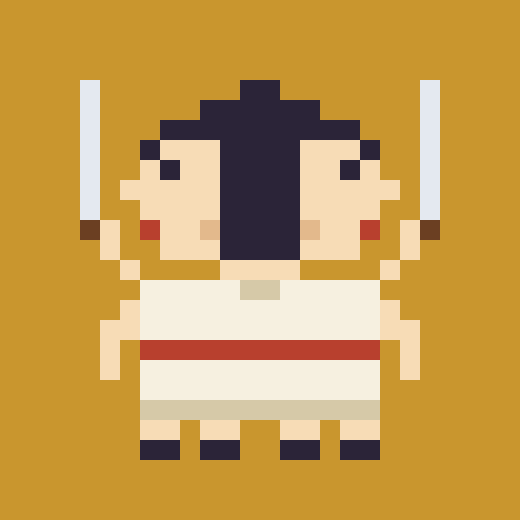
The strangest thing about Ryomen-sukuna isn't its body. It's how it's remembered. In the official history compiled in the capital, it's a monster that defied the court and was struck down. But back home in Hida (the northern part of today's Gifu Prefecture), it's a hero who founded a temple and helped the people. One name has come down to us in two opposite forms — rather like two faces set back to back.
Sukuna in the Nihon Shoki
The name Sukuna first appears in the Nihon Shoki, a history of Japan compiled in the Nara period (8th century). Placed in the reign of Emperor Nintoku, a short passage says there was someone called Sukuna in Hida.
The description is very strange. One body with two faces, each looking in the opposite direction. The heads joined at the crown, with no nape of the neck. Each face had its own arms and legs; there were knees, but no hollow behind the knee and no heels. It was strong and fast, wore a sword on each side, and used a bow and arrows with its four hands — so the record says.
The passage ends by saying that Sukuna ignored the emperor's commands and robbed the people, so a commander was sent from the court and struck it down. Seen from the capital, Sukuna is a fearsome thing that needed to be defeated, and it vanishes from history in just a few lines.
Sukuna as Hida remembers it
In Hida, though, a very different Sukuna lives on.
Senko-ji, a temple in Nyukawa, Takayama City, is said to have been founded by Ryomen-sukuna. Sukuna is remembered there as an important figure in the temple's beginnings.
Across the lands from Hida down to Mino (southern Gifu), there are also tales of Sukuna slaying an evil dragon that had been tormenting the people. Here Sukuna isn't the monster; it's the one who defeats the monster. It has long been honored as a hero who protected the land, almost like an ancestor of the people.
The Sukuna that Enku carved
In the Edo period, the monk Enku traveled from region to region carving countless wooden Buddhist statues. He is said to have come to Hida and stayed at Senko-ji, and he left a statue of Ryomen-sukuna at the temple.
Enku's statues are known for their simple, powerful style, with the marks of the chisel boldly left in the wood. The very fact that Enku chose to carve Sukuna, remembered as the temple's founder, seems to tell us what Sukuna meant to the people of Hida.
Which face is the real one?
A monster that was struck down, or a hero of the land. Which is the real Sukuna?
One view is that because the Nihon Shoki was written from the court's side, a powerful local figure who refused to obey the capital may have been portrayed as a frightening, deformed being. In a similar way, the tsuchigumo began as a name for people who didn't submit to the court, and later turned into a yokai.
Of course, this is only one reading, and nothing is certain. Still, a figure with faces on both front and back seems like a fitting picture of a being that looks completely different depending on where you stand.
On Ryomen-sukuna's Yokaipedia page, you'll find its two faces drawn in pixel art. On the Yokai Map, Sukuna pops up in Hida, Gifu.