STORIES
Coming Back for the Arm — Watanabe no Tsuna and Ibaraki-doji
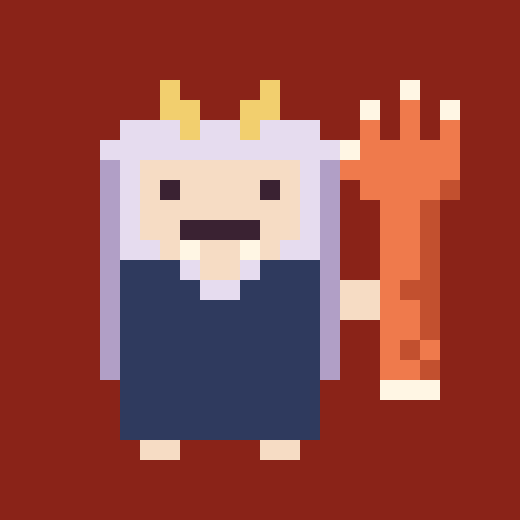
Ibaraki-doji's most famous story isn't about an oni being slain. It's about an oni coming back to reclaim its own severed arm — and not by force, but by disguising itself as the one person its enemy could least refuse. It's frightening, yet it slips through a very human gap: our soft spot for the people we love.
A woman on the bridge at night
The setting is Kyoto, the old capital, at a bridge over the Horikawa river called Ichijo Modoribashi. The tale says that Watanabe no Tsuna, one of the four famous retainers of Minamoto no Raiko, was crossing it late one night.
At the foot of the bridge stood a beautiful woman. She asked him to see her home, because the night road frightened her. Tsuna let her ride on his horse and set off. But before long her shape began to change, and she revealed her true form: a terrifying oni. It grabbed Tsuna by the hair and tried to fly off into the sky with him.
Tsuna didn't panic. He drew the sword at his side and cut off the arm that gripped his hair. The oni shrieked and fled, the story goes, leaving behind nothing but an arm covered in thick, coarse hair. That oni, it's said, was Ibaraki-doji.
The arm in a box, the house shut tight
Tsuna took the arm home and locked it away in a box. The oni would surely come back for it. So, following the advice of a diviner, he shut his gate and began a period of "monoimi," a kind of ritual seclusion in which you stay indoors, meet no one, and keep yourself pure.
During monoimi, the gate must not be opened for anyone. The oni knew that well. A frontal attack would never get it through that gate. So it chose the one visitor Tsuna would most want to let in.
Knocking at the gate as his aunt
One day there was a knock at Tsuna's gate. It was his aunt, who lived far away — in some versions, the woman who had raised him. She had come such a long way to see him, she said; surely he would let her in? In the end Tsuna couldn't say no, and he opened the gate.
Happy to be reunited, the aunt soon said she would love just one look at this famous oni's arm. Tsuna hesitated, reminding her he was in seclusion, but thinking of all she had done for him, he couldn't refuse her for long. The moment he opened the box, the tale says, the aunt turned back into an oni, seized the arm, and burst up through the roof and away into the sky.
This version is best known as the plot of Ibaraki, a Kabuki dance drama. Its high point is the back-and-forth between the aunt, pleading to see the arm, and Tsuna, who wants to refuse but can't. The oni's weapon wasn't brute strength. It was affection.
Modoribashi or Rashomon?
Some versions say the arm was cut off not at Ichijo Modoribashi but at Rashomon, the great gate of the capital. In the Noh play Rashomon, talk at a drinking party turns to a rumor that an oni haunts the gate, and Tsuna rides out to see for himself. At the gate he grapples with the oni and cuts off its arm. The oni of Rashomon and Ibaraki-doji are often said to be the same oni.
Ichijo Modoribashi is also known from a legend that the onmyoji (court diviner) Abe no Seimei kept his spirit servants hidden under the bridge. It has long been told of as a border — between inside and outside the capital, between this world and the next. Perhaps that's exactly why it suited a story about an oni waiting there in human form.
For Ibaraki-doji's escape from Mount Oe, see Ibaraki-doji's Yokaipedia page. For its chief, see Shuten-doji's Yokaipedia page and the story Raiko and the Oni of Mount Oe.