STORIES
The Neighbor in the Banyan Tree: How People and Kijimuna Got Along
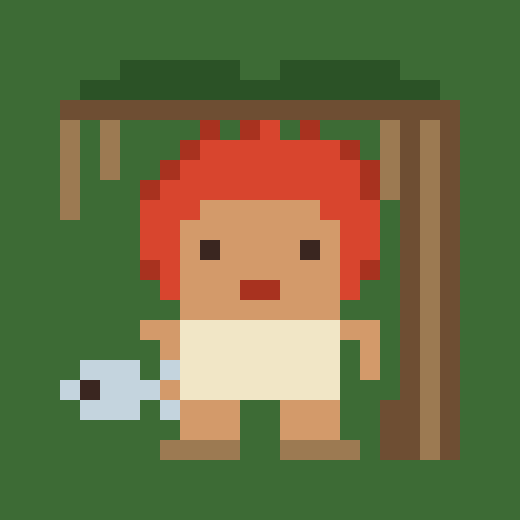
Follow the stories of the kijimuna, and you'll find far more tales of friendship than of fright. Going fishing together, falling out over small things: the kijimuna handed down in Okinawa feels less like a yokai feared from afar and more like a neighbor who happens to live in the tree next door.
The gajumaru tree
The home most often given to the kijimuna is the gajumaru, a kind of banyan (Chinese banyan). In Okinawa it's a big tree you see right in the middle of daily life, in gardens and along the roadside. Its signature is the curtain of thin "aerial roots" it lets down from its branches. When those roots reach the ground they thicken, eventually turning into trunks of their own, until the whole tree becomes a strange, tangled shape.
An old gajumaru, shaggy with dangling roots and deeply shaded even at noon: stand beneath one and look up, and you can understand why people imagined something living there. Even the kijimuna's messy red hair starts to look a little like the tree itself.
Make a friend, go to sea
Among the stories about people who befriend a kijimuna, the best known are about fishing. Kijimuna are said to be wonderful at catching fish, and to invite their human friends out to sea and help them bring home a huge catch.
The fun part is how they split it. All the kijimuna wants is the fish eyes; everything else goes to the human. There is something sweet and childlike about being so easily satisfied. There are even stories of families who grew prosperous thanks to their kijimuna friend. A little friend from the treetops bringing home the gifts of the sea: it's striking how Okinawa's forests and ocean meet in a single tale.
When the bond is broken
But a friendship with a kijimuna doesn't always last. One story tells of a person, worn out from being invited out night after night, who drove the kijimuna away with the octopus it hates, or harmed the tree it lived in. After that the kijimuna never showed itself again, and the family's fortunes began to fade.
Read one way, this is less about how frightening a kijimuna can be and more a warning about failing to treasure a bond once it's made. Take care of the tree it calls home; don't do what your friend can't stand. It's advice that holds true between people, too.
A curious likeness to the zashiki-warashi
A spirit in the form of a child, who brings good fortune to the household it stays with, and whose leaving sends that household into decline. This pattern is remarkably close to the legends of the zashiki-warashi of Japan's northeast. It's fascinating that such similar stories were told in places so far apart.
Yet while the zashiki-warashi stays deep inside the house, in the inner room, the kijimuna lives in a tree outdoors and heads out to sea. A child of the house, and a child of the trees and the ocean. Put side by side, they show something of how people lived in each place. You'll find more about the kijimuna's looks and its likes and dislikes on its Yokaipedia page. And the next time you pass a great old tree, why not look up and say hello?