STORIES
The Nekomata in Essays in Idleness: What the Monk Really Met on the Night Road
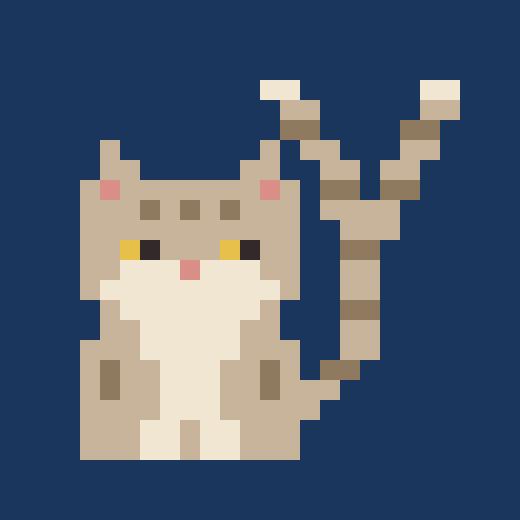
The best thing about the nekomata is that it already turns up in an essay written some seven hundred years ago, and the story is not a scary one but a funny one. Essays in Idleness (Tsurezuregusa), traditionally credited to the monk Kenko, includes a section about a monk so frightened by nekomata rumors that he comes to grief on a dark road. It shows just how long the name "nekomata" has been on people's lips.
The nekomata scare in Essays in Idleness
Essays in Idleness is a collection of short essays thought to have been put together at the end of the Kamakura period. In it, there's a story that goes like this.
Someone was saying, "Deep in the mountains there's a thing called a nekomata, and they say it eats people." Another person answered, "Not only in the mountains. Even around here, they say, a cat can grow old, turn into a nekomata, and carry people off."
Listening in was a monk who loved renga, a pastime in which several people take turns adding linked verses to a poem. One night, walking home alone late from a renga gathering, he was passing along a small stream when the nekomata from the rumors suddenly leapt at his feet. Scared out of his wits, he yelled for help and tumbled straight into the stream.
When the people of his house came running with lights, what did they find? The monk's own dog. Even in the dark, it had recognized its master coming home and jumped up at him for joy. The prizes he had won at the renga gathering were soaked, and the monk scrambled back into the house, thoroughly embarrassed. Not exactly a heroic ending.
The mountain nekomata and the house nekomata
What's fun about this story is that the rumors already contain both faces of the nekomata.
One is the nekomata of the deep mountains: a mysterious beast living far from any village. In later times, too, stories were told in many regions of nekomata living in the hills.
The other is a cat that lives right beside people and turns into a nekomata as it grows old. Because it's so close to home, this version is the creepier one. The cat that curls up on your lap every day, and then one day, seen from behind, its tail has split in two. Ideas like that have made the nekomata all the more uncanny.
Perhaps the monk panicked because of those words, "even around here." A tale about faraway mountains is easy to laugh at, but once it's about your own road home, the dark suddenly gets a lot scarier.
The lore of the forked tail
The nekomata's surest mark is a tail split in two from the root. Because of this, there are stories that cats with long tails were disliked, since they might become nekomata when they grew old. Some sayings even tell of tails being shortened while the cats were still kittens, and one theory holds that this is one reason short-tailed cats were favored in Japan.
Of course, a real cat's tail never splits. But a cat's tail moves so freely that it can seem to sway in two directions at once, and people long ago must have felt there was something more to it.
How is it different from the bakeneko?
The nekomata and the bakeneko, the shapeshifting cat, are often hard to tell apart. Both are said to be old cats with strange powers, able to speak in human words or take human form. The easiest difference is that forked tail. If the tail splits, think nekomata.
You'll find the bakeneko's legends on the Bakeneko page of our Yokaipedia, and the ghost-cat tale from Saga in our story on the Nabeshima Bakeneko Disturbance. For the nekomata's own lore, visit the Nekomata page of our Yokaipedia. And if something leaps at you on a dark road, stay calm. There's a very good chance it's just your dog.